
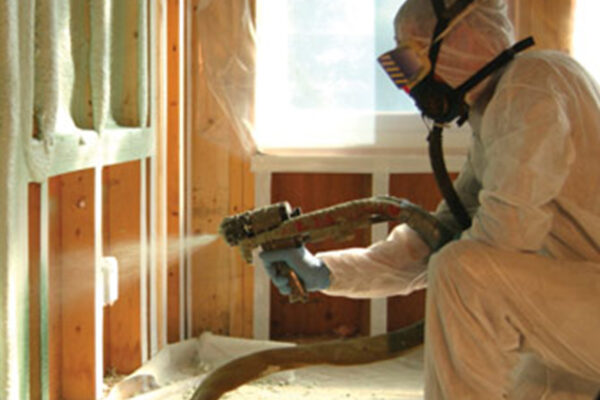
exterior home window with foam sprayed in walls

Weatherization Contractors

Are you a weatherization contractor? Here’s what you should know about SPF installation.

As a spray polyurethane foam (SPF) professional — contractor, homebuilder, applicator, architect, marketer or helper — you’ve probably seen the growth in demand for SPF products and your services.

SPF insulation has grown in popularity in large part because it is so good at keeping homes warm in winter and cool in summer.


Because SPF is sprayed directly into the gaps, cracks and other surfaces that contribute to heat loss, it both insulates and air seals, offering one of the easiest and most effective ways of insulating and weatherizing existing homes and new construction.

Among other benefits, SPF can help save on energy use, reduce heating and air conditioning size, and reduce drafts and noise. These and other benefits have probably been something that you have been asked to describe to customers.

As an SPF professional, you’re in a position to talk about the benefits of SPF and answer questions from customers. SPF professionals have a responsibility to stay informed about the safe use and handling of SPF products. This site will help you achieve that. An initiative of the American Chemistry Council’s Center for the Polyurethanes Industry (CPI), it is designed to help you be a better — and better informed — professional.

Occupant Outreach

SPF applicators and their helpers receive professional training regarding the hazards associated with SPF application, but building occupants are not necessarily aware of the potential health hazards associated with SPF application or safety precautions that can minimize the risk. SPF application involves the potential for exposure to a variety of chemicals, including SPF chemicals, coatings, and solvents. Consider potential exposures to all of the chemicals used on a job when developing an occupant outreach strategy.

  • Educate building occupants. Applicators and contractors can educate building occupants about the health hazards associated with SPF and the ways they can protect themselves from these hazards. For a sample checklist of information you may wish to consider discussing with owners, designees, or occupants, see Discussing SPF Application with Building Owners and Occupants checklist. Although there is a lower risk of inhalation exposure to SPF chemicals in exterior applications than interior applications due to natural ventilation, contractors may wish to consider use of the checklist as a tool to guide discussions with occupants. In commercial and public buildings, contractors may choose to provide outreach to building owners or their designee as well as to individual tenants.
  • Discuss safety topics in advance. You can also refer to the guidance document intended for homeowners called Selecting and Working with SPF Contractors. As an SPF contractor or building and construction professional, you may want to discuss some of the topics outlined in this homeowner guidance document in advance of the SPF installation.
  • Use PPE as needed. On occasion, owners or their designee may wish to enter the work area before the building is cleared for occupancy in order to review the work. PPE may be needed for entry into the work area, even for persons who are not involved in the application of SPF chemicals. You may wish to discuss alternatives for viewing the application or the work status with the owner or designee that avoid exposure issues, such as using photographs or real-time video to allow the owner or designee the opportunity to view the work.

Frequently Asked Questions for Contractors

General FAQs

What chemicals are used to make SPF insulation?

Spray polyurethane foam (SPF) insulation consists of the combination of two liquid components, commonly referred to as an A-side and a B-side.

  • A-side: The A-side is typically a 50/50 mixture of methylene diphenyl diisocyanate (MDI) and polymeric methylene diphenyl diisocyanate (pMDI), or MDI-based diisocyanate. The drums may be color-coded red or black. Also known as polymeric methylene diphenyl diisocyanate or “PMDI.”
  • B-side: The B-side is a polyol resin blend — the principal ingredient being polyol — and smaller amounts of amine and/or metal catalyst, blowing agent, surfactant, and flame retardant. The drums may be color-coded blue or another color.

What are the potential health effects of overexposure to MDI (A-side or isocyanate)?

MDI has a potential risk of irritation and sensitization through inhalation and skin contact. Exposure can affect skin, eyes, and lungs. Once sensitized, continuing exposure can cause persistent or progressive symptoms and even life-threatening asthmatic reactions, so sensitized people should be removed from potential exposure activities. Wear the proper personal protective equipment (PPE) when working with MDI. See the manufacturer’s Safety Data Sheet (SDS) for more detailed information on potential health effects.

What are the potential health effects of overexposure to polyol blend (B-side or resin)?

The polyol blend has a potential risk of irritation to the respiratory system, skin, and eyes. Wear the proper PPE when working with polyol blends. See the manufacturer’s SDS for more detailed information on potential health effects.

What are some other potential hazards to be aware of during SPF application?

Confined spaces
Some attics and crawlspaces could fall within the OSHA definition of “confined spaces.” Work in confined spaces should comply with the requirements specified in the OSHA Safety and Health Regulations for Construction, specifically 29 CFR 1926 Subpart AA – Confined Spaces in Construction. OSHA requires that workers be instructed in the nature of the hazards involved, precautionary measures to be taken, personal protective equipment needed, and emergency procedures, among other items.

Falls
Falls are among the most common causes of serious work-related injuries and deaths. OSHA requires that employees receive training in the following areas prior to assignment to work projects (29 CFR 1926.503):

  • Nature of fall hazards in the work environment
  • Correct procedures for erecting, maintaining, disassembling, and inspecting fall protection systems
  • Correct procedures for handling and hoisting materials and equipment
  • Correct procedures for working with ladders, scaffolding, and aerial lifts

Use guardrails, toe-board, warning lines, safety monitoring, and personal fall arrest systems as described in applicable regulations. In the construction industry, a fall protection plan is required by OSHA for each project if the worker is to be six feet off the ground or higher.

Fire
SPF is a combustible material similar to many other components in a building. Avoid exposing the polyurethane foam to extreme heat (>200°F) or open flame due to the possibility that such extreme heat can ignite the foam.

There are type A, B, and C fire extinguishers (typically dry chemical extinguishers) and professional firefighting foams that may be used when there is a small fire. Water may also be used in large quantities. SPF fires can grow very quickly and beyond the point of control of normal extinguishing practices. Evacuate all unnecessary personnel from the affected area during a fire as soon as possible and immediately contact the local fire authorities.

In addition, applying too much SPF per pass, without allowing time for the foam to cool, could create a fire hazard. Follow the SPF manufacturer’s recommendations concerning the thickness of individual passes (lifts) and the cooling time between passes. Closed cell SPF retains the heat from the reaction more than open cell SPF and can achieve higher temperatures for a longer period of time.

Although uncommon, fires can occur during construction. The risks of fire during construction may be reduced through safe practices, such as not allowing open flames or hot work, including torch cutting, soldering or welding, near building products that may easily ignite.

See Fire Safety Guidance: Working with PU Foam Products During New Construction, Retrofit and Repair and Polyurethane Products: Overview of U.S. Model Building Code Fire Performance Requirements for more information.

How should SPF chemicals be stored?

  • Store A- and B-side drums in a secured, cool area away from direct sunlight, excessive heat, and general storage areas. Consult the manufacturer’s instructions for the recommended temperature at which to store drums.
  • Ventilate the storage space as described by the manufacturer and locate away from possible sources of ignition.
  • Store MDI (A-side) drums in locations that limit the risk of contact with water, acids, caustics (such as lye), alcohols, and strong oxidizing and reducing agents.
  • In addition to storing containers away from incompatible materials, it is important to maintain a tight seal on MDI containers to protect against moisture or direct contact with water. Water reacts with MDI to release carbon dioxide gas. If high levels of carbon dioxide gas accumulate inside a sealed container, the drum can rupture or explode.
  • When opening the B-side drums, slowly open the bung or stopper to help release any built-up pressures, allowing the drum to be opened safely. This is especially important with closed cell SPF.

What should be done in the event of a spill?

Although infrequent, sizable spills and releases of A- and B-side chemicals can occur. If this happens, it is important to take immediate action to minimize environmental contamination. Comply with federal, state, and local laws and ordinances for spills and responses to spills. Always refer to the SDS for information. For more details, visit Spill Response.

What first aid procedures should be followed?

It is critical to be familiar with the SDS in advance to know the proper first aid procedures for the SPF component chemicals on the jobsite. In general, if someone is affected by inhalation of A-side or B-side chemicals, move them to an area with fresh air immediately and seek medical attention. If someone is exposed to SPF component chemicals through skin contact, shower or splash the affected area with large amounts of water to cleanse the skin and then wash with soap and water. Consider seeking medical attention if skin contact is extensive or if irritation develops or persists. For eye contact with SPF chemicals, flush the eye(s) immediately for at least 15 minutes with large amounts of lukewarm water. Seek professional medical attention as soon as possible. If SPF chemicals are ingested, do not induce vomiting. Obtain professional medical attention as soon as possible.

Pre-Installation FAQs

What are some important points to consider when planning an SPF installation project?

Because application of SPF insulation is a construction activity where conditions can change quickly as the project progresses, proper planning is essential for a safe and successful installation. Before the application of SPF, the SPF contractor should consider the following practices:

  • Conducting a pre-job meeting with the owner/owner representatives and other contractors to discuss the nature of the chemical hazards and to properly schedule SPF application work.
  • Requesting that everyone but SPF workers vacate the building during SPF application work.
  • Planning to isolate and ventilate the SPF application area if others cannot vacate the building.
  • Being knowledgeable of SPF health & safety resource information available from manufacturers, the Center for the Polyurethanes Industry (CPI), and the Spray Polyurethane Foam Alliance (SPFA).
  • Obtaining Safety Data Sheets (SDSs) for the specific SPF product to be installed.

For more details, visit Planning and Site Preparation.

What should I consider when selecting a contractor to install SPF insulation so the work can be completed safely and in accordance with installation guidelines?

It is important to select a qualified SPF contractor that is knowledgeable of proper safety and health practices as well as manufacturer application guidelines. Many companies have instituted accreditation programs for contractors applying interior spray foam insulation.

Requirements of contractor accreditation programs may include:

  • Successful completion of the Center for the Polyurethanes Industry (CPI) High Pressure SPF Chemical Health and Safety Training. This training must be repeated at least every two years.
  • Affirmation that the contractor has Hazard Communication and Respirator Programs that meet OSHA requirements.
  • At least one employee per rig has completed an applicator training program.
  • All application equipment meets minimum manufacturer recommendations.

For more details on Spray Polyurethane Foam Chemical Health and Safety Training, visit Training.

What are some important elements of a job site safety plan?

  • Verification that all personnel read and understand the SDS for each material involved with the spray polyurethane foam application process.
  • A copy of the most current SDS is available at all times (i.e., cab of the truck or in the trailer that is transporting the spray equipment).
  • Communication procedures between the crew and customer.
  • Overspray mitigation plan.
  • Proper start-up and shut-down procedures for both SPF process equipment and the customer’s equipment (i.e., HVAC system) when applicable.
  • Review of Manufacturer’s Technical Data sheets that detail proper application procedures.
  • Onsite review of the job site, noting any potential safety hazards and special needs.
  • Controlling access to the spray area.
  • Proper set up for all equipment with particular emphasis on ladders or scaffolding which could present fall hazards.
  • Proper set up for establishing the work area and restricting access by posting warning signs.
  • Emergency procedures with notification procedures.
  • Chemical spillage procedures with current remediation and notification procedures.
  • Job site location and directions to the job site from the nearest major intersection.

What emergency contact numbers should be available?

Access to emergency services is essential for the safety and welfare of the application crew. On larger projects, the general contractor normally has standard procedures to follow in an emergency situation. Post emergency contact information so it is readily available to all personnel. Inform crew members on where to find emergency information, including phone numbers, address or location of the job site and/or directions to the job site for emergency personnel, SDSs, and emergency equipment on the spray rig. Contact information for the following are commonly provided to crews:

  • Local fire department
  • Local emergency medical services
  • Local emergency management organization
  • Local environmental management agency
  • General contractor/owner emergency contact numbers
  • CHEMTREC: 1-800-424-9300

Should an equipment checklist be used?

Yes. Proper equipment care and maintenance is important and should be a regular focus on the jobsite. A simple equipment inspection checklist that contains a schedule of routine preventative maintenance helps with a long-term, safe, and efficient operation. Consider a systematic approach that includes routine inspections and daily start-up and shut-down procedures that identify potential safety issues before they occur and reduce the possibility of failing to comply with OSHA requirements. An example of a daily work log can be found in Appendix 8.2 of Guidance on Best Practices for the Installation of Spray Polyurethane Foam.

Installation/Application FAQs

Is having a daily work log a good practice?

Yes. A daily work log can provide the framework for a company to support safe and consistent operation. The historical data accumulated in a work log can be important when documenting a work place incident. It is also a good way for a business to monitor equipment, material usage, and quality control. An example of a daily work log can be found in Appendix 8.3 of Guidance on Best Practices for the Installation of Spray Polyurethane Foam.

What type of PPE should be worn during SPF application?

Generally, PPE is required for applicators, helpers, and other adjacent workers who may enter a spray foam application work area. PPE to consider includes: protective clothing, gloves, eye and face protection, and respiratory protection. The effectiveness of PPE depends on both proper selection and proper use. Always refer to the manufacturer’s SDS and the Personal Protective Equipment section of this site.

What practices should be considered regarding building occupants and other trades?

Vacate building occupants and non-SPF personnel from the building during the application of SPF and for a period of time following the completion of spraying. Where this is not possible or practical, for example, in large commercial buildings, containment and ventilation techniques can be utilized. For residential applications, the homeowner should vacate the home and return only after the specified reoccupancy time. Giving notice to other trades working in proximity to the spray application area is an important consideration in larger commercial projects due to the number and kinds of workers in and around the job site.

How should ventilation be used for SPF installation?

Set up and check portable ventilation equipment to provide fresh air into the immediate spray application area and exhaust humidity, vapors, and odors. Exercise care so that portable exhaust ducts do not introduce the exhausted air into occupied, unprotected areas. Consider utilizing the best practices for the use of containment and ventilation techniques detailed in the U.S. Environmental Protection Agency’s Ventilation Guidance for Spray Polyurethane Foam Application.

The ACC Center for the Polyurethanes Industry also has published a useful document on Ventilation Considerations for Spray Polyurethane Foam.

How can overspray be managed?

Overspray is when the SPF application goes beyond the intended area. Train employees in overspray prevention and determine in advance the overspray risk posed by the job. Having a plan in place to address overspray incidents in the event that an issue arises is a good practice. Identify and protect surfaces that could be affected in advance of the spray application. For work outdoors, take wind direction into account for all spraying operations. In slightly windy conditions, consider windscreens or tenting. Avoid spraying during sustained wind speeds or gusts exceeding 15 miles per hour.

Post-Installation FAQs

When can other workers (non-SPF workers) reenter the SPF application work area?

The SPF manufacturer should be consulted to establish the recommended reentry time. Reentry times are dependent on a number of factors, including SPF formulation, the amount of foam applied per volume of space, temperature, humidity, the degree of ventilation and other variables. Manufacturers typically recommend that the spray area be ventilated during the time period before reentry using blowers or exhaust fans to establish air flow.

When can building occupants return to the structure after SPF application?

The SPF manufacturer should be consulted to establish the recommended reoccupancy time. Reoccupancy times depend on a number of variables. Manufacturers typically recommend a minimum of 24 hours after spray operations are completed and that the spray area be ventilated during this time. Blowers or exhaust fans can be used to establish air flow through the work area. For more details, visit Reoccupancy.

What is the proper way to dispose of unused chemicals, scrap foam, and empty containers?

Dispose of all scrap SPF foam, liquid SPF component chemicals and empty drums in compliance with all federal, state and local waste disposal guidelines. Follow the SPF manufacturer’s guidance on how to dispose of waste. For more details, visit Disposal of SPF Chemicals.

Empty drums can pose a hazard. As with waste material, dispose of all drums according to procedures in the manufacturer’s SDS and all federal, state, and local requirements. The Reusable Industrial Packaging Association (RIPA) can assist in locating a qualified container reconditioner in your area.

For more information on disposal of drums used to contain or transport SPF chemicals, refer to the ACC CPI poster Disposal of Empty Drums Containing Polyurethane Chemicals.

Refer to CPI’s Guidelines for Management and Disposal of Hazardous Wastes from Polyurethane Processing for more information regarding responsible disposal of wastes and containers from polyurethane processing.