What Is SPF and How Does It Work?
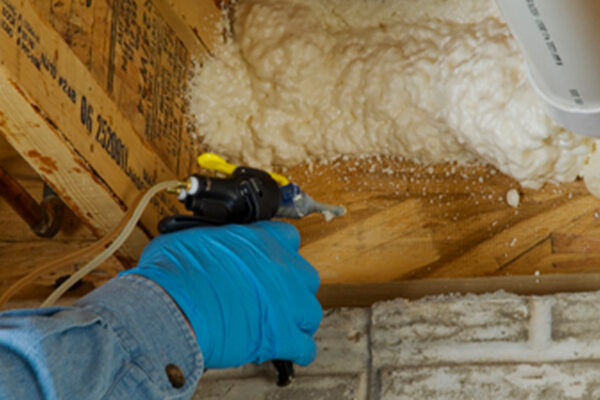
SPF is made by mixing chemicals to create foam that insulates, air seals, and provides a moisture barrier. When properly installed, SPF forms a continuous barrier on walls, around corners and on contoured surfaces. It resists heat transfer very well and is an effective solution for reducing unwanted air infiltration through creaks, seams, and joints.
The chemicals that create foam are provided in separate drums. The chemicals must be kept separate until they are mixed and the chemical reaction can begin. The two separate drums or canisters have different chemicals in them and are referred to as the “A” side and “B” side.
- A-side: The A-side is typically a 50/50 mixture of methylene diphenyl diisocyanate (MDI) and polymeric methylene diphenyl diisocyanate (pMDI), or MDI-based diisocyanate. The drums may be color-coded red or black.
- B-side: The B-side is a polyol resin blend — the principal ingredient being polyol — and smaller amounts of amine and/or metal catalyst, blowing agent, surfactant, and flame retardant. The drums may be color-coded blue or another color.
Polyols are part of the chemical reaction to make polyurethane foam. The remaining ingredients in the B-side serve different purposes to help control the creation of the foam bubbles (the “cells”) in an optimal way, and to provide the various characteristics of the finished foam product (flame retardancy, for example).
After the chemicals are mixed and reacted, the foam hardens very rapidly. The time to complete reaction depends on the type of SPF insulation and other variables.
For more information about the typical composition of the A-side and/or B-side chemicals used in SPF systems, refer to the ACC CPI Health and Safety Product Stewardship Workbook for High-Pressure Application of SPF.
Important Note:
Be aware that the denoted colors of the A- and B-sides may be reversed outside the U.S.

Safety Data Sheets
The degree of risk presented from the chemical in the mix varies. There is a difference, for example, in the amount of MDI available prior to mixing the chemicals; after they are mixed and begin reacting; and again after the reaction has been fully completed and the foam hardens. Extreme care must be taken when working with the SPF pre-mix chemicals and throughout every stage of the installation. Improper application by unprotected workers could result in overexposure to the SPF chemicals, which can pose potential health risks.
Safety Data Sheets (SDS) are available for both A- and B- side chemicals. For SPF professionals, it’s important to understand the information on safety sheets and be able to share the details with customers.
Professional SPF Installation: Educating the Customer
Professionals should give their customers guidance about the process for installation and time when they can reenter their home after an interior two-component foam insulation application.
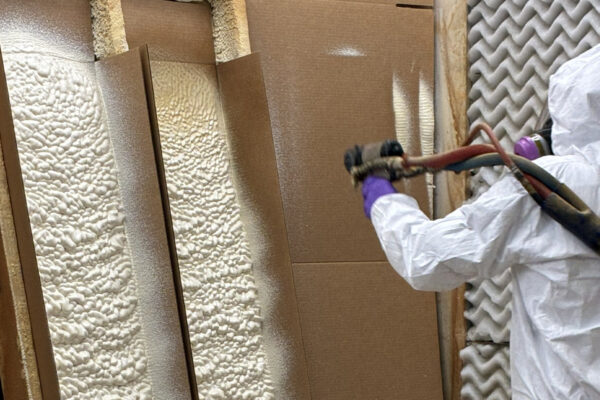
Part of that guidance will be explaining that interior two-component foam is applied by the professional using specific personal protective equipment (high-pressure foam is installed while using a respirator, for example). Professionals should explain clearly to customers that this equipment, coupled with certain work and engineering practices, including ventilation, is used to minimize exposures to the chemicals used to make SPF during the job.
Further, professionals should share how homeowners can minimize or eliminate their exposure to the chemicals used to create spray foam by carefully following guidance about not occupying the home or space during the installation, job completion, and cleanup, and for an appropriate period after.